
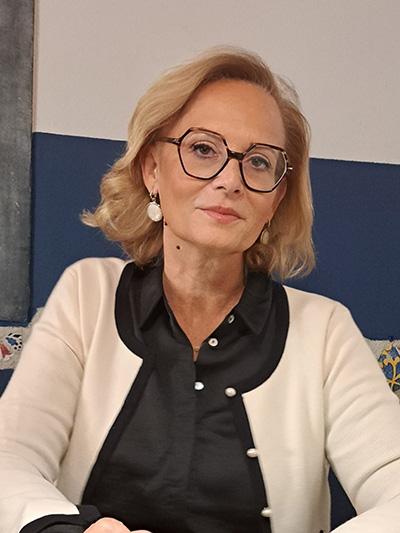
Angela Valenti
Università di Palermo, Italy
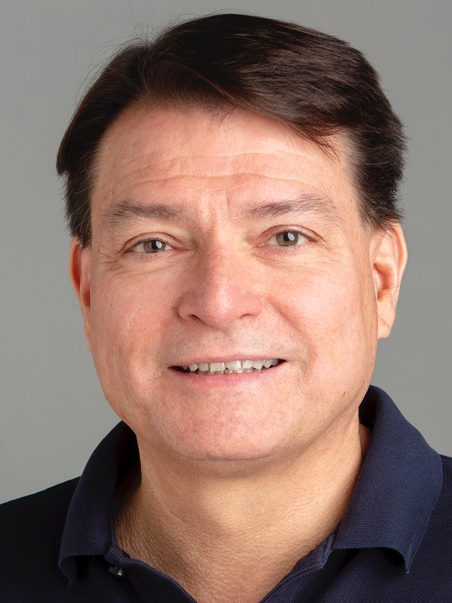
Douglas Ulmer
University of Arizona, USA

Eloisa Detomi
Università degli Studi di Padova, Italy

Luciane Quoos Conte
Universidade Federal do Rio de Janeiro, Brazil

Marcelo Lanzilotta
Universidad de la República, Uruguay

Matej Brešar
University of Ljubljana, Slovenia
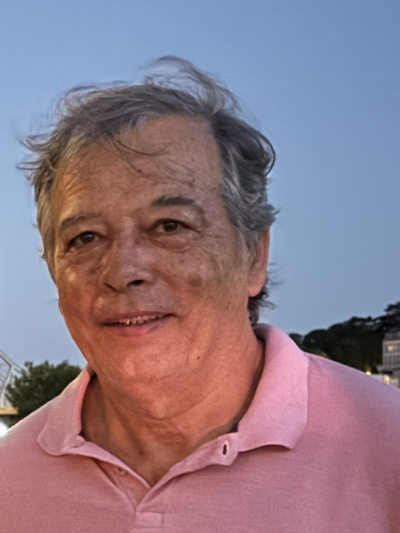
Nicolás Andruskiewitsch
Universidad Nacional de Córdoba, Argentina
Steven Cutkosky
University of Missouri, USA

Sylvia Wiegand
University of Nebraska-Lincoln, USA

Vyacheslav Futorny
Southern University of Science and Technology, China
The aim of this lecture is to report on the progress made in recent years on the understanding of the asymptotic behaviour of some numerical sequences related to a PI-algebra (an algebra with a polynomial identity).
Let A be an associative algebra over a field F and let F<X> be the free associative algebra of countable rank. A polynomial f ∈ F<X> is called a central polynomial of A if, for any a1, …, an ∈ A, th

Università di Palermo, Italy
The Torelli locus — the image of the moduli space of curves (Mg) in the moduli space of abelian varieties (Ag) — is much-studied but still mysterious. In characteristic p, Ag has a beautiful stratification by the isomorphism type of the p-torsion A[p], and examples show that Mg is far from transverse to this stratification.
In an ongoing project, we develop tools to understand (and perhaps make principled conjectures about) which strata of Ag meet Mg. In this talk, we explain some of the structures involved and then give some new results about them. Parts of this are joint work with Bryden Cais and Rachel Pries.

University of Arizona, United States
In this talk, we explore the relationship between commuting probabilities and subgroup structure in finite and profinite groups. We introduce the notion of Pr(H, K), which denotes the probability that random elements from subgroups H and K of a finite group G commute.
We will discuss the cases where H and K are Sylow subgroups, where bounds on Pr(H, K) have high impact on the structure of G, both in the finite and in the profinite cases. We will also address the following question: Given a p-subgroup P of a finite group G, if Pr(P, Px) ≥ ε > 0 for all x ∈ G, can we bound the order of P modulo Op(G) — the largest normal p-subgroup — only in terms of ε?
We present several positive results, but show that in general the answer is negative. A key finding is that when the composition factors of G (isomorphic to simple groups of Lie type in characteristic p) have bounded Lie rank, the order of P modulo Op(G) can be bounded in terms of this rank and ε. Additionally, we prove that for Sylow p-subgroups, the order of P modulo Op(G) is bounded exclusively by ε.
The talk will also cover related results and their implications.

Università degli Studi di Padova, Italy
Algebraic Geometry (AG) codes leverage the structure of algebraic curves over finite fields to construct error-correcting codes with theoretical guarantees. This geometric approach provides bounds on code parameters, such as length, dimension, and minimum distance. In this talk, we will present the general theory behind AG codes and then focus on novel constructions that achieve specific desirable features. We will introduce and discuss several interesting constructions of AG codes tailored to these needs.

Universidade Federal do Rio de Janeiro, Brazil
The talk will focus on topics of Homological Algebra, with a special emphasis on Representations of Algebras. The finitist conjecture was formulated 66 years ago, and hundreds of research papers have cemented its enigmatic profile. In the presentation, we will provide a summary of some results in the direction of the finitist conjecture, placing main emphasis on newer tools such as Igusa-Todorov functions, delooping level, derived delooping level, etc. If time permits, we will relate this conjecture to other homological conjectures in the area.

Universidad de La República, Uruguay, Uruguay
The theory of functional identities deals with identical relations on rings which involve arbitrary functions that are considered as unknowns. Formally, the concept of a functional identity (FI) generalizes the concept of a polynomial identity (PI). In practice, however, the FI theory serves as complement to the PI theory, rather than being its generalization. The aim of the talk is to survey the FI theory, along with some of its applications.

University of Ljubljana and University of Maribor, Slovenia
After more than 15 years of work, the question of classifying finite-dimensional Hopf algebras over finite simple groups is nearing completion, thanks to the efforts of many authors. An overview of the methods used for this problem and the results obtained so far will be presented.

Universidad Nacional de Córdoba, Argentina
The filtration of powers In of an ideal I of R, the filtration of symbolic powers of a prime ideal, and the filtration of integral closures of powers of an ideal I are examples of graded families. Associated to discrete valuations v1, …, vr dominating R and a1, …, ar ∈ ℝ>0, there is a graded family defined by
In = { f ∈ R | vi(f) ≥ ain for 1 ≤ i ≤ r }.
Such filtrations are of fundamental importance in birational geometry, especially the problem of determining when their Rees algebra is finitely generated. An example of such a graded family is the filtration of integral powers of an ideal, for which the valuations are the Rees valuations of the ideal. In many cases, the graded family of symbolic powers is such a graded family. We discuss the geometry of the Proj of the Rees algebra of a graded family, which can be Noetherian even when the Rees algebra is not.

University of Missouri, United States
Conformal field theories are intrinsically connected with the representation theory of infinite dimensional Lie algebras via the vertex structures. This connection results in certain smooth representations of infinite dimensional Lie algebras (Virasoro, Heisenberg and Affine Lie algebras). The main challenges include classification of smooth representations and understanding of the module category for simple affine vertex algebras. We will discuss the current state of these problems and the role of twisted localization techniques in the study of relaxed highest weight representations.

Southern University of Science and Technology, China